v0.15.14 GNU AGPL v3.0 Linux amd64 and arm64
A mail and calendar server in one Go binary.
Bongo serves IMAP, SMTP, POP3, CalDAV and CardDAV, and has a web interface for mail, calendars, contacts and tasks. Its storage is embedded, so there is no separate database to run. Several servers form a cluster through Raft.
Architecture
One process holds every protocol listener and all storage. The port numbers are the production defaults.
- SMTP25 465 587
- IMAP143 993
- POP3110 995
- CalDAV443
- CardDAV443
- Web443
Features
Bongo replaces a mail transfer agent, an IMAP server, a CalDAV server and a webmail client with one program.
- SMTP for inbound mail, submission and relay through a smarthost
- IMAP and POP3, with implicit TLS and STARTTLS
- DKIM signing per domain; SPF and DMARC evaluation
- MTA-STS and DANE for outbound TLS
- Spam scoring with an optional Bayesian filter; optional ClamAV scanning
- Filter rules, vacation replies and forwarding
bongo-importfor mbox, Maildir, .eml, IMAP and Thunderbird
Calendars and contacts
- CalDAV and CardDAV for Apple Calendar, Thunderbird and other clients
- Calendar sharing at free/busy, read or write level
- Invitations by email (iMIP) and by CalDAV scheduling (RFC 6638)
- Published calendars as iCalendar feeds; subscriptions to external feeds
- Tasks (VTODO), rooms and equipment that answer booking requests
- Email reminders
Domains and administration
- Many domains on one server, each with its own DKIM key, catch-all, administrators and quota
- Alias domains
- A generated DNS record set per domain, with live status checks
- Two-factor authentication with TOTP
- Client autoconfiguration for Thunderbird, Outlook and Apple devices
Storage and clustering
- No external database: Pebble, a blob store and per-user SQLite and Bleve indexes
- Identical messages are stored once
- Search indexes can be rebuilt from the stored data
- A backup is the Pebble key space plus the blobs it references
- Raft replication between three or five servers
Web interface
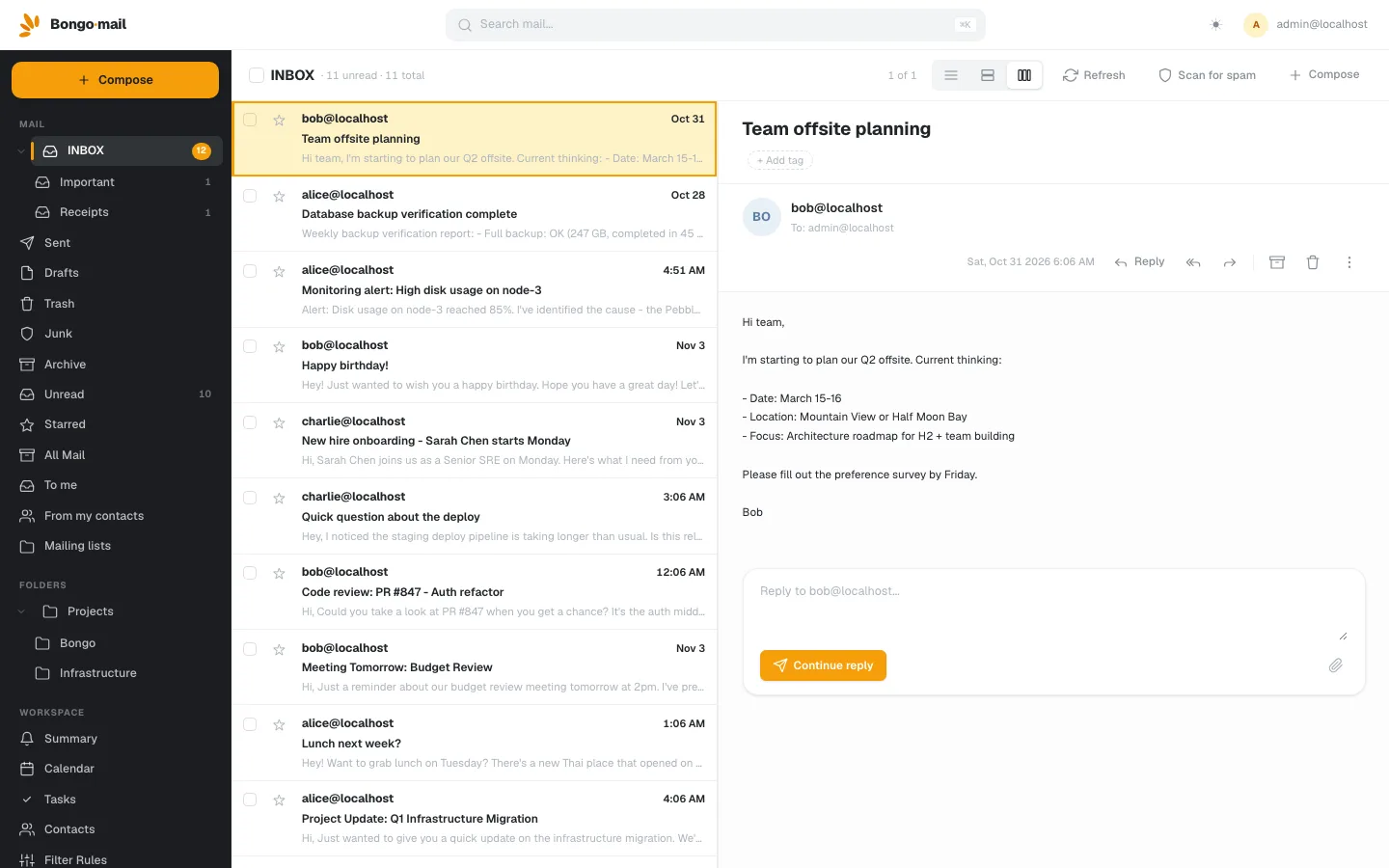
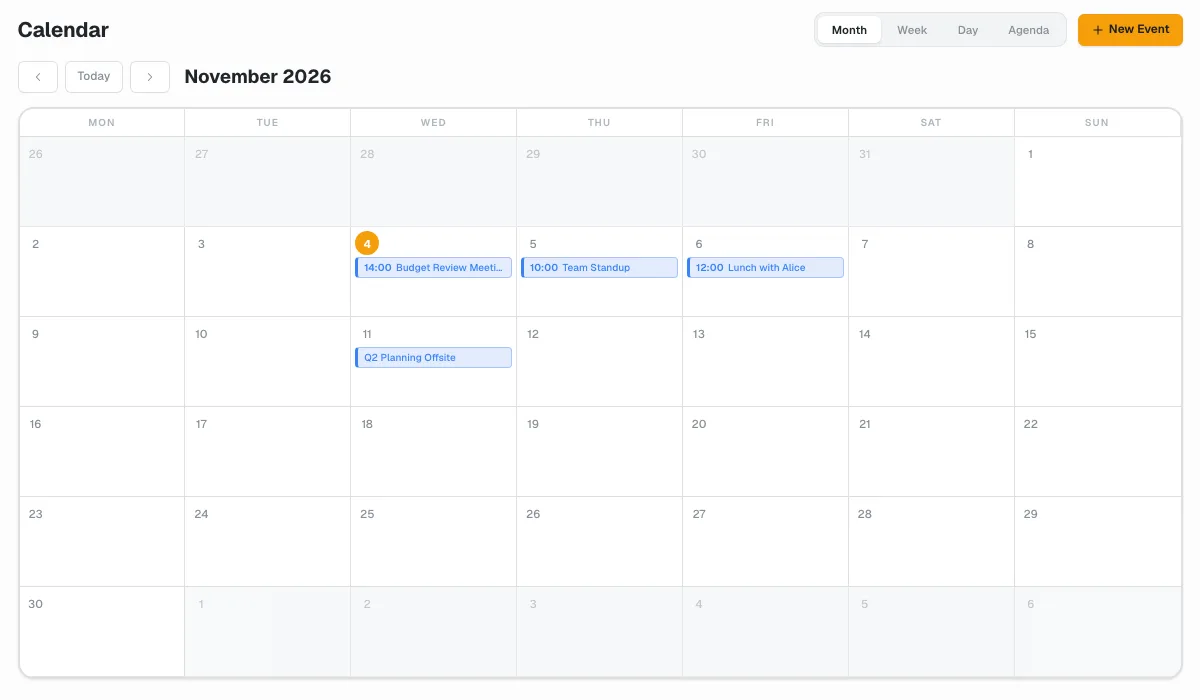
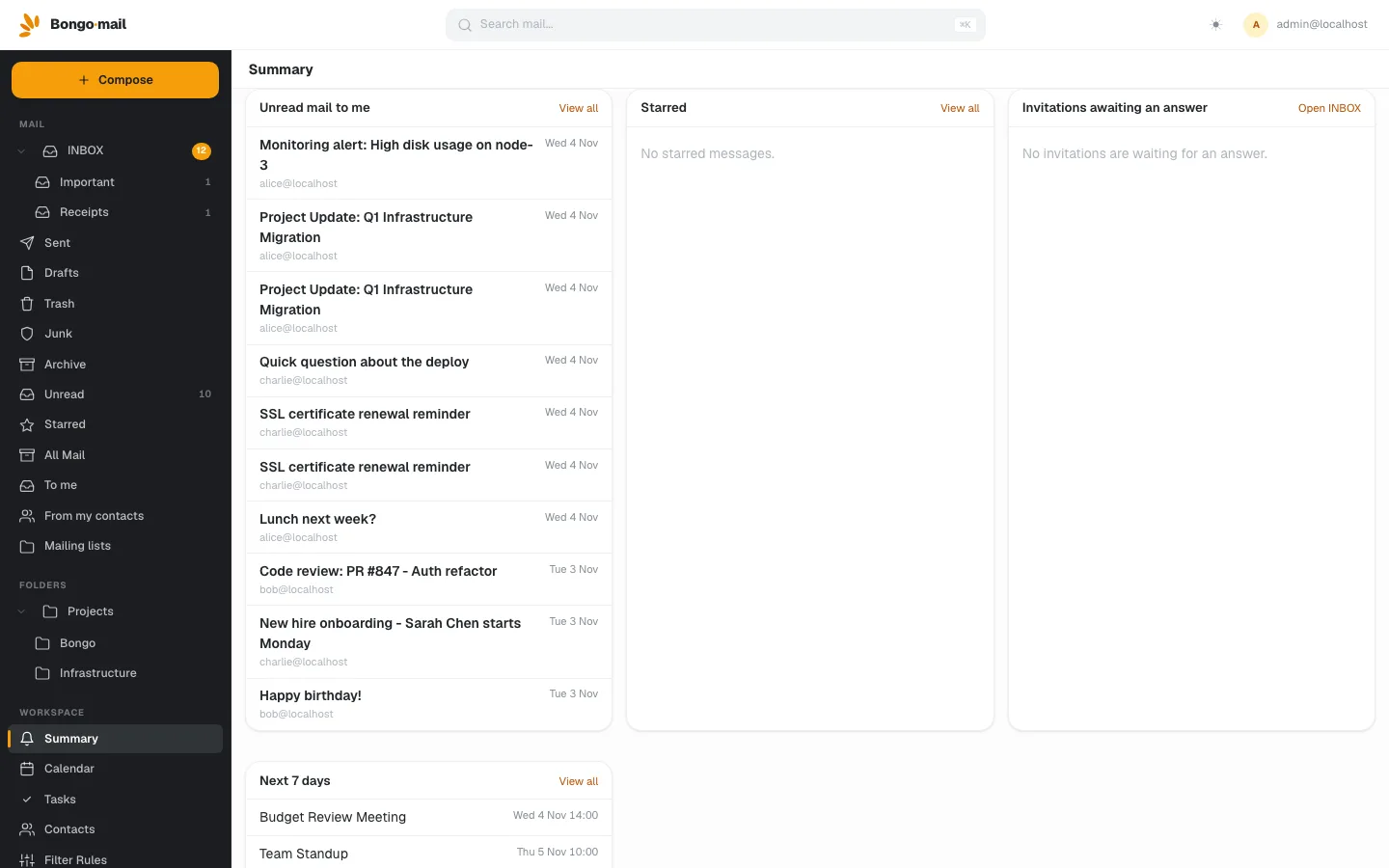
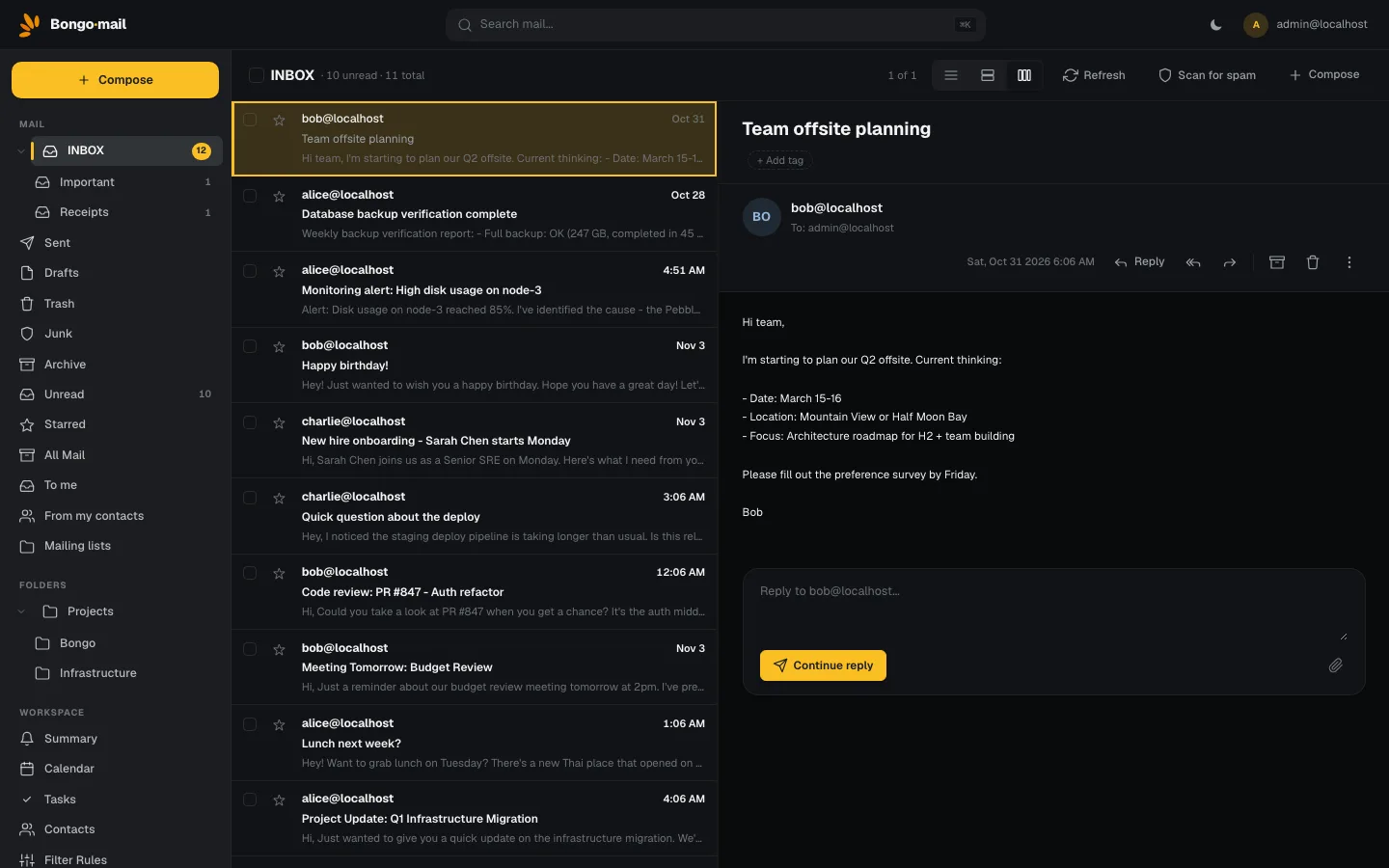
The web interface is server-rendered HTML with HTMX and Alpine.js. It has light and dark themes. The screenshots show a development server with test data.
Get started
Each release has a zip for Linux amd64 and arm64 with the bongo and bongo-import binaries, an annotated example configuration and a systemd unit. The binaries have no runtime dependencies.
Development mode needs no configuration. It keeps nothing on disk after it stops, serves the web interface at http://localhost:8080 and creates the login admin@localhost with the password admin.
# v0.15.14, Linux amd64
unzip bongo_0.15.14_linux_amd64.zip
cd bongo_0.15.14_linux_amd64
sudo install -m 0755 bongo bongo-import /usr/local/bin/

# Try it in development mode
bongo serve --dev
Status
Bongo is pre-1.0. A single-server deployment runs in production and has had several security reviews. Multi-server clustering is implemented and has had less testing. The edge and agent server roles are incomplete. Only the latest release receives fixes.
Source and licence
The source is at github.com/bongo-project/bongo. Bongo is licensed under the GNU Affero General Public License v3.0. Bug reports and pull requests are welcome. Security problems are reported privately, as described in SECURITY.md.
History
The original Bongo project ran from 2007 to 2010 and was written in C and Python. It continued Hula, a mail and calendar project led by Novell. The current Bongo is a reimplementation in Go. The original project's pages are kept under History.